The culture of Tajikistan is an elegant and calm eastern worldview. At all times, Tajiks have been committed to creation and creativity, science and enlightenment, revered independence and good neighborly existence, maintaining pride, like mountain peaks and perseverance.
One of the greatest achievements of the period of independence is the achievement of linguistic independence and the acquisition of the Tajik language status of the state language. During this period, thanks to a conscious policy on language - the most important factor in the inviolability of the nation, the national language as the state language received a special status and position in the political, economic and socio-cultural spheres.
We can proudly state that the state language in our country is under the patronage and constant attention of the Head of State Emomali Rahmon , and in the name of its protection and comprehensive development, in 2009, at the proposal of the President of the country, a new Law of the Republic of Tajikistan “On the state language of the Republic of Tajikistan” was adopted.
During the years of independence, also for the purpose of gradual implementation of the state policy on language and the above-mentioned Law, the Government created a new structure - the Committee on Language and Terminology under the Government of the Republic of Tajikistan, which indicates the constant attention of the President and the Government of the Republic of Tajikistan in protecting and honoring national values, in including language.
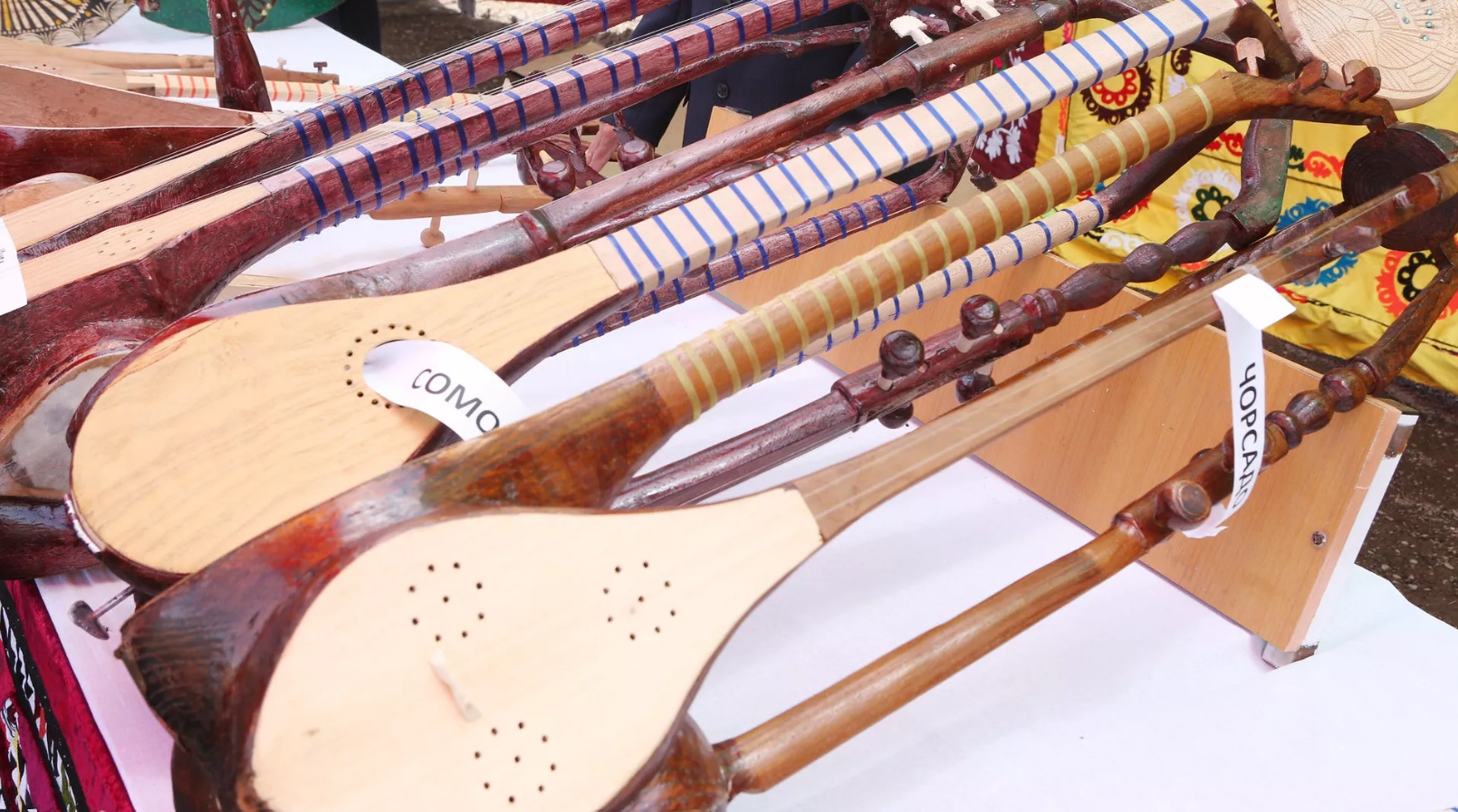
Today, the music of Tajikistan is presented in several directions: folk, classical, modern. The history of the musical culture of Tajikistan goes back more than 2000 years, as evidenced by chronicles and artifacts from archaeological excavations.
In the Middle Ages, Tajik scientists and thinkers created treatises on music, in which they described the structure of the scale, musical instruments and their acoustic properties.
Folk music of Tajikistan is conventionally divided into several styles - central, northern and Pamir. Classical music has several genres, but the central one is the "shashmakom" genre, which means six "maqoms". If we try to draw an analogy with European music, then “makom” is similar to a suite, and “ shashmakon ” is already an entire opera.
Thanks to the ongoing cultural policy and the tireless attention of the President of the Republic of Tajikistan Emomali Rahmon, “Shashmakom Day” and “Falak Day” were established in order to revive and preserve classical and folk music. Thus, these two ensembles, having gathered the best singers into their composition, along with performances in radio and television programs, annually report on their activities to Tajik viewers. During this period, in the name of protection and further prosperity of the wonderful national musical heritage of the Tajiks, the state ensemble.
Falak was formed in 2001, which brought together the best performers of this art form. Today, this ensemble, having found its creative form, has enriched the treasury of Tajik music with its new songs and melodies.
The ensemble "Gulrez" is also a new manifestation and was formed in 2000. This ensemble laid the foundation for innovations and a new style in folk music. The ensemble “Gulrez” today adorns the stage not only of domestic events, but also on the stages of foreign countries highly raises the prestige and glory of our art. In addition to all this, the existence and activity of this ensemble is a school of excellence, training and improvement for young performers. Young artists here learn skills lessons, the best remain or are sent to study at universities.
The periodical press is an important component of a democratic society. Radical changes have also been made in this direction over the years of independence.
The immortal heritage of ancestors for adults and children from the series “Stars of Morality” and “School Library” were published with good quality by the publishing houses “Adib” and “ Maorif ”. Thanks to independence, books and other precious creations became available to readers - the Holy Quran, Masnavi Manavi (Collection of spirituality), "Hidoyai Sharif" (Noble Farewell), "Shahname", "Kabusname", "Kimiyoi" Khirad " (Elixir of Wisdom)," Akhloki Mukhsini" (Ethics of Mukhsini ), "The Adventure of Khotam", "Tutinoma" (Book of the Parrot), "Guliston" (Flower Garden), "Buston" (Garden), "Shashmakom" (Six Motifs).
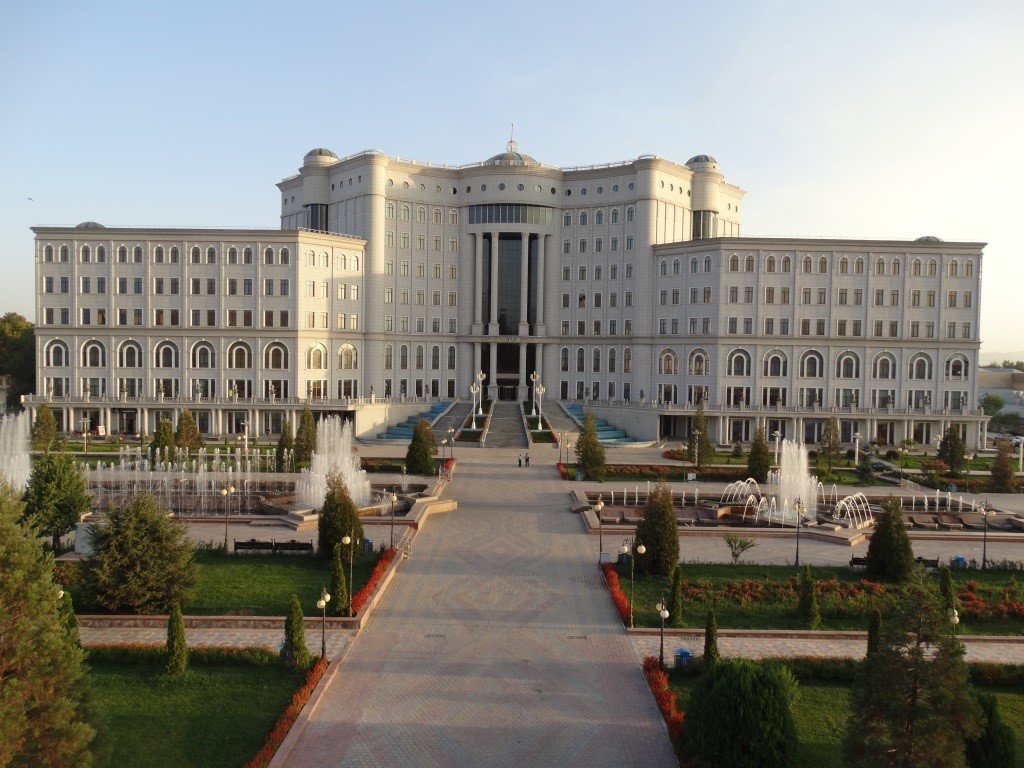
One of the striking phenomena of the period of independence was the assignment of national status to the National Library of Tajikistan named after Ferdowsi and the National Museum of Tajikistan named after Bekhzod . During this period, the first National Conservatory of Tajikistan was formed.
Tajikistan is a unique country where the cultures of East and West have merged. The architecture of Tajikistan is distinguished by its strong individuality, deep symbolism and rich cultural heritage.
In the Republic of Tajikistan, where over 2 thousand historical and cultural monuments are located, over the years of independence, on the instructions and direct support of the Head of State, 36 unique monuments have been restored and repaired in cities, districts and regions, including mausoleums, museums, mosques, fortresses, madrassas and minarets . At the same time, in order to protect historical and cultural monuments, the Khulbuk Historical and Cultural Reserve, the Republican Museum-Reserve in Dangara , and the State Enterprise Panjrud Republican Historical and Cultural Complex were formed. n 2011, on the eve of the 20th anniversary of state independence of the Republic of Tajikistan, two grandiose architectural objects will be commissioned - new buildings of the National Library and the National Museum, which will add new beauty and solemnity to the appearance of Dushanbe.
Architectural monuments in Tajikistan are located in various hard-to-reach areas of the country, 93% of which are mountains.
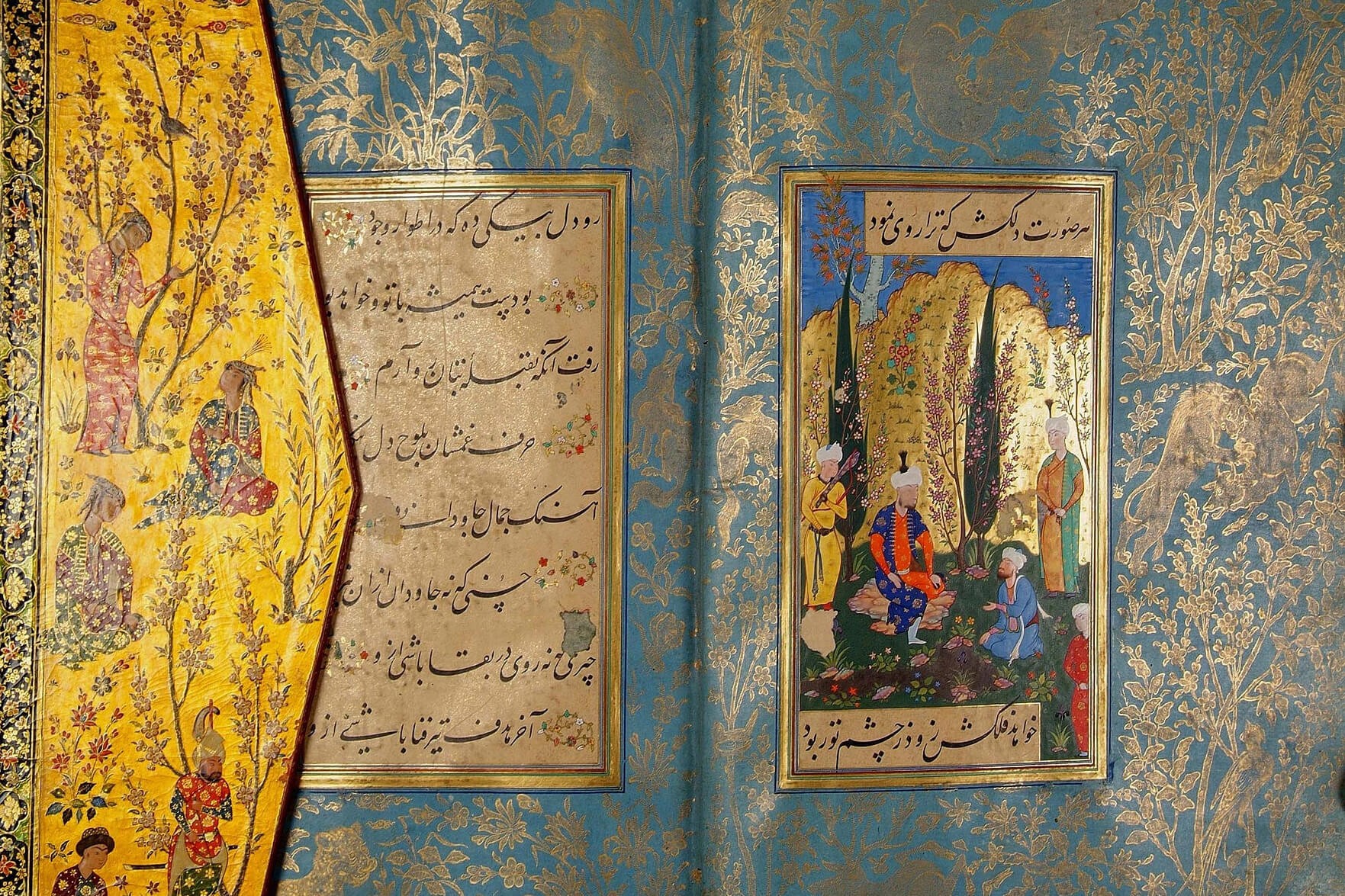
Tajik literature and poetry are thousands of years old and have come a long way from folklore to drama. Tajik literature was once part of Persian literature, but became a separate movement in the 16th century. The most famous Tajik authors were Rudaki, Ferdowsi, Jami , Ahmad Donish and Sadriddin Aini, and it was their works that often gave direction to the entire literature of Tajikistan. The themes for the works changed along with the eras, but one thing always remained unchanged - the style of the writers was full of poetic forms.
Aini became the continuer of traditions and at the same time the founder of new Tajik literature, highlighting various aspects of the history, social, political, cultural and literary life of his people.
The modern cultural life of Tajikistan is impossible to imagine at the State Opera and Ballet Theater named after. Aini, Tajik Drama Theater named after. Lahuti, Russian Drama Theatre, Academy of Sciences, state universities, historical museums, museums of fine arts, botanical gardens, and other cultural institutions.
Over the past 20 years, with the participation of numerous guests from near and far abroad countries, many anniversaries of great representatives of history and world-famous Tajik literature have been held at a high international level, which testify to the worthy veneration of the leadership of the Tajik state for the glorious past of the history and culture of the Tajik people. All this once again proves that the Head of State cares and appreciates the deep ancient civilization of the Tajik nation.
Many festive events dedicated to the anniversaries of poets and writers and public political figures of the Tajik people, such as Abulqasim Ferdowsi, Sayyid Ali Hamadoni , Kamol Khujandi , Omar Khayyam, Bobojon Gafurov, Mirzo Tursunzade, Muhammad Asimi , Bakhodur Iskandarov , Gulom Aliyev, Alouddin Bogouddinov , Loik Sherali and others, contributed to a new analysis and reading of their heritage, better and more deeply familiarized the world community with the science and culture of Tajikistan, and contributed to strengthening the national pride of the people.
These measures, which have historical, cultural and universal significance, created conditions for a better awakening of the self-awareness of the Tajik people, restoration and strengthening of their ties with foreign Tajiks, allowed them to take a fresh look at their historical and cultural roots, take practical measures to achieve the unity and unification of the nation, growth of national pride.
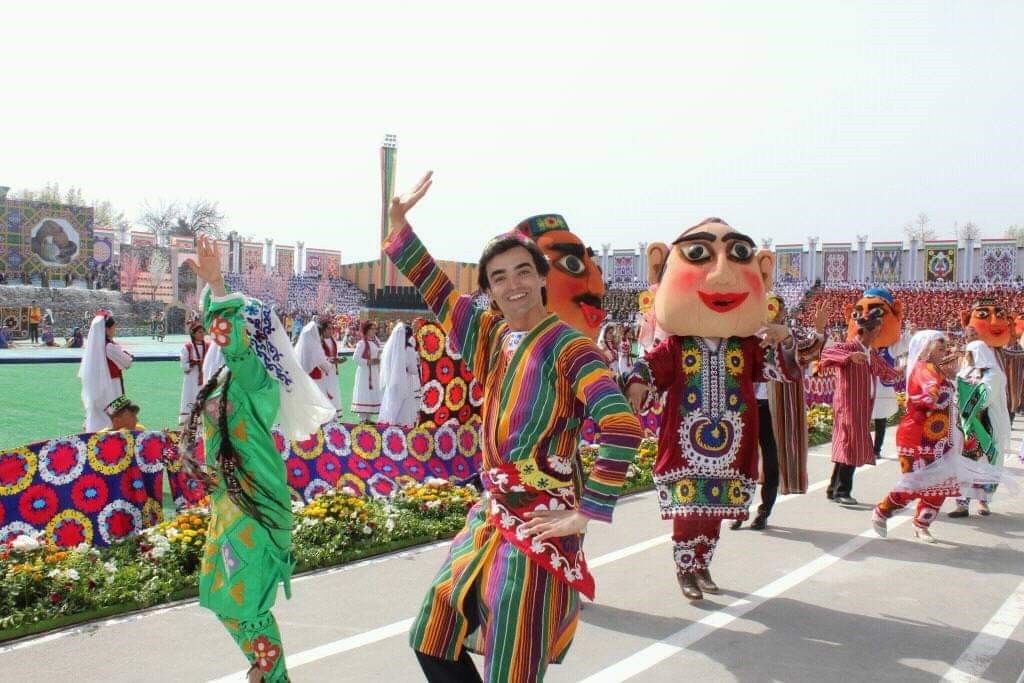
The most striking manifestation of Tajik culture is dancing! Tajik dances are spectacular and varied in their choreography. Today they are usually divided into folk and professional, as well as into various schools - Bukhara, Kulyab, Gissar, Pamir, etc.
Types of Tajik dances
There are many types of dance in Tajikistan that are difficult to list and systematize. These are male and female, folk and stage, everyday and ritual, etc. Only a part will be given here to give an approximate idea of Tajik dances.
Eagle dance
One of the oldest dances in Tajik culture, associated with the veneration of the mountain eagle. It is performed by both men and women, imitating the flapping of the wings of an eagle soaring high in the sky. The dance has no restrictions or strict rules of performance, and it can often be seen at holidays and weddings.
Chor-Zarb
The name of this dance translates as “four rhythms.” Four girls take turns performing their dances in different rhythms, and then dance together. There is an element of competition in this dance and the dancers try to show all their skills.
Dance with a musical instrument
This is a group of dances that are united by a common idea - the dancers imagine that they are performing with a certain musical instrument. Among them there is “raks bo doira” (dance with doira), “raks bo dutor " (dance with dutar), "raks bo gidzhak" (dance with gidzhak). The dance can be performed by both men and women.
Girl with a jug
A soft, flexible dance in which a girl imitates going to a spring for water. The first part of the dance is calm, as if the girl is walking to the water. And the second part is filled with energy and joy, as the girl supposedly sees her reflection in the water. When the “jug” is filled, the girl takes it and gently leaves.
In addition, there were ritual and everyday dances, like the dance of a girl with a jug - dance with a carpet, dance of a cook, dance of a weaver and others. And also dances about travel - a dance with a boat, a dance with a horse and even a camel caravan dance.
Tajik dances can be described for a very long time, but in order to truly understand their beauty, feel the energy of the dancers, it is better to come to Tajikistan and see everything with your own eyes.
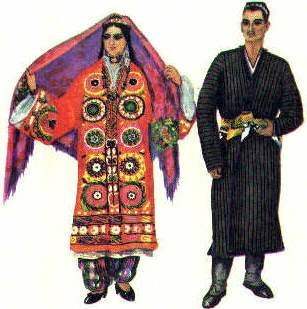
Women's national costume.
Women dressed in loose dresses made of smooth fabrics. In the mountainous southern regions, especially in Darvaz and Kulyab, dresses were richly embroidered and were examples of folk decorative art. The costume was complemented by wide trousers.
Headwear - scarves, skullcaps. Traditional jewelry - necklaces, bracelets, pendants, earrings, rings. The women's costume, in terms of the composition of the required elements, was similar to the men's; it consisted of a shirt (" kurta ") and trousers in the same way . The women's shirt was cut in the same way as the men's, but was much longer and decorated with rich embroidery. “Kurta” could be plain or bright, multi-colored, or decorated with a pattern. Women's bloomers were usually made from two types of fabric: the upper part was made of cheaper cotton - pleasant to the body and “breathable”, and the lower part, which is visible from under the shirt, was made of elegant and more expensive material. The bloomers ended with a beautiful braid that tied around the ankle. When leaving home, each woman had to put on a special type of cape - a burqa (" faranja").
Men's national costume
Men wore a tunic-shaped shirt , wide-legged trousers, a swinging robe, a scarf belt, a skullcap, and a turban. Shoes were leather boots with soft soles, leather galoshes with pointed toes (they were worn separately, sometimes put on boots), and in mountainous areas - clog-type shoes with three spikes on the sole for easy walking along mountain paths.
In modern Tajik clothing, traditional elements (outer robe, skullcap) are combined with urban clothing, and in women's clothing, national elements still dominate today. A robe (“ chapan ”), with a swinging, straight cut, was put on right over the shirt. For summer, a light version was provided - without lining; for winter - a denser version, made of cotton wool, with quilting along the entire field of the product. Robes, as a rule, were sewn from striped (stripes along) or colored cotton fabric.
The headdress for Tajiks has always been the skullcap, which was a low conical cap, intricately decorated with embroidery, the pattern of which, better than any document, indicated the origin and place of residence of the owner. Lowland Tajiks also wore a turban over their skullcap. By the 20th century, a flat square skullcap, black with white embroidery, came into fashion among Tajiks.
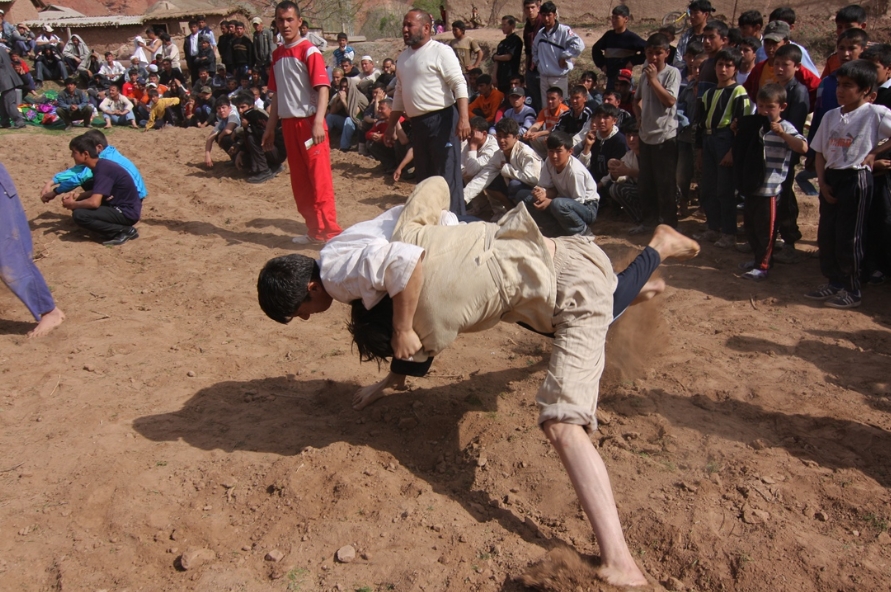
Equestrian competitions, horse games, and hand-to-hand combat were the most popular. Competitions in which participants demonstrated and developed strength, courage, agility, courage, and ingenuity.
One of these competitions is the game Buzkashi , which is also found among other peoples of Central Asia, but each nation has its own characteristics and variations; the main unifying point is only the carcass of a goat (ram), which must be taken from the enemy.
But the Tajik national game Chavgonbozi definitely has common roots with the world famous horse polo.
For a long time, many peoples of the world have had such a type of competition as freestyle wrestling - a truly masculine competition. For Tajiks this is Gushtingiri . Here you can show your strength and ingenuity, without which it is impossible to knock your opponent to the ground.
As in the old days, today it is impossible to imagine a single celebration and holiday without national games and competitions, which have their roots in the depths of centuries and demonstrate not only the peculiarity of a particular people, but also their common brotherhood coming from antiquity.
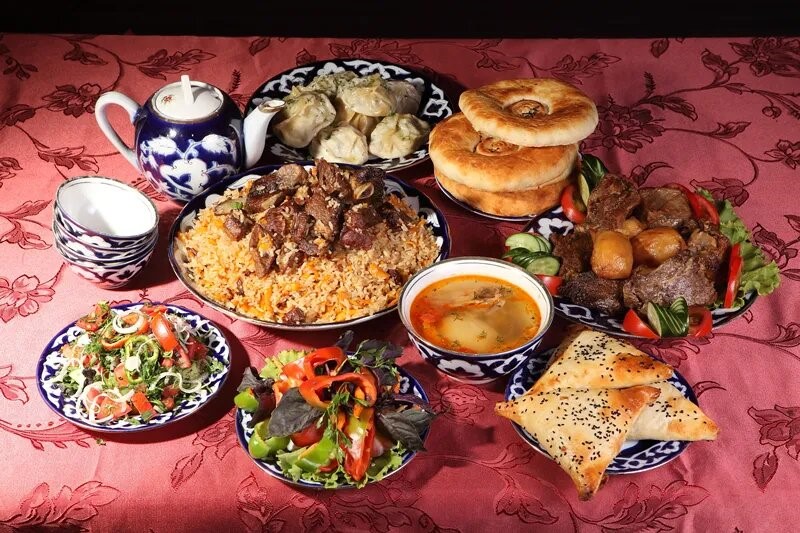
Tajik national cuisine is one of the oldest in the world. The culinary art of Tajiks has been formed over many centuries under the influence of the rich history of the region.
Tajikistan surprises guests with dozens of different types of dishes: meat, dairy, flour, vegetables and so on. The cooking methods themselves vary from region to region.
One of the most famous and popular local dishes is oshi palov - pilaf. Not a single Tajik table is complete without non flatbreads, shurbo - potato soup with meat, kabob - lamb shish kebab and other dishes.
Spices are worth mentioning separately - they add a little more here than in neighboring Uzbekistan and Turkmenistan. This makes the cuisine of Tajikistan a little similar to that of the Caucasus. Local culinary traditions also highlight the use of more onions. Whether it’s onions in manti or green onions in szhurva , it fits perfectly into the overall flavor tone of the dish, ennobles it and makes it juicier.
The special attitude towards buns and other bakery products turns Tajikistan into a paradise for lovers of dough products . It is here that unique flatbreads - kulcha - are baked ; once you start your breakfast with them, it will be difficult to even switch to delicious pies with herbs and golden chuchvara . By the way, the very name of these flatbreads indicates their small size and is translated as “palm”. This shape and volume allowed mountain shepherds (shepherds) to use all the bread at once, without leaving broken pieces.
Separately, it is worth mentioning the high role of fruits . They have always been consumed in large quantities. It is even possible not to offer meat to the guest, but a vase with mattely shining grapes, plump apples and peaches emitting a languid aroma will always decorate the dastarkhan.
Holidays in Tajikistan
December 31-January 1 - New Year
March 8 - International Women's Day/Mother's Day
March 21 - Nowruz
The date changes every year - Eid Ramazon Holiday
May 1 - International Workers' Day
May 9 - Victory Day
June 27 - National Reconciliation/Unity Day
The date changes every year - Idi Kurbon holiday
September 9 - Independence Day
November 6 - Constitution Day of Tajikistan
In Tajikistan, national and state holidays are accompanied by spectacular and cheerful folk festivities. Usually these are weekends. They are allocated from two days to a week.
March 21, Navruz
The celebration of Navruz in Tajikistan is an incredibly beautiful spectacle.
On these holidays, spring finally comes to the ancient Tajik land and reveals all its splendor. The gentle sun warms the mountain peaks, snowdrops appear - the main harbingers of the holiday. Traditionally, they are handed out to children as a symbol of the beginning of spring.
Nowruz is celebrated widely: in cities on this day there are festive performances and concerts, and in villages there are horse races, sports competitions, cockfights, buzkashi , as well as the flying of pigeons and kites.
Ramazon holiday
This is a holiday in honor of the end of the holy month of Ramadan, which comes after the end of a long fast, during which believers refused to eat and drink during the daytime. The holiday of Eid al- Fitr is not just an opportunity to break the fast, but also a renewed perception of the surrounding world and existence after spiritual purification.
Go Ramazon - a holiday of peace and goodness. On this day, men gather early in the morning at the mosque for holiday prayer and visit the graves of the deceased.
On holidays, be sure to meet with family and friends at the festive table. Tajikistan has a very interesting cuisine, based on ancient traditions of hospitality and the pursuit of beauty. Even on ordinary days, the Tajik table is a work of culinary art, and on holidays it amazes with the splendor of colors, aromas and abundance.
June 27, National Reconciliation/Unity Day
In 1998, the President of Tajikistan Emomali Rahmon signed a decree declaring March 27 as the Day of National Reconciliation and a day off. Celebrations and promotions are held throughout the country on this day.
Date changes annually, Idi Kurbon holiday
One of the most revered religious holidays among all Muslims. Celebrated 70 days after the end of the month of Ramadan. There is a legend in scripture about the origins of this holiday. It talks about how Allah did not allow the devout Muslim Ibrahim to sacrifice his son Ismail by placing a ram on the sacrificial altar. Since then, it has been customary to sacrifice animals as a symbol of faith in the omnipotence and mercy of the Almighty.
On the holiday of Idi Kurbon , believers put on new elegant clothes, visit the mosque, and slaughter a sacrificial lamb or calf. The meat is divided into three parts. One is distributed to the poor, the second to relatives, and the third is used as a holiday treat. These days, the doors of houses are open to guests and fun reigns everywhere.
September 9, Independence Day
Celebrations on the occasion of Tajikistan's Independence Day are held in the state complex "Kokhi Borbad ", in the parks "Ayni", "Friendship of Peoples", on the "800th Anniversary of Moscow" square, in the capital's Amphitheater. The festive concert program includes performances by the best creative groups of the republic and outstanding pop and theater artists. The festive atmosphere is also present at family feasts.
November 6, Constitution Day of Tajikistan
The Constitution of Tajikistan was adopted on November 6, 1994 through a popular referendum. Constitution Day is very important for the people of the Republic and is widely celebrated throughout the country.
On this day, the president of the country addresses all residents of Tajikistan with congratulations.